

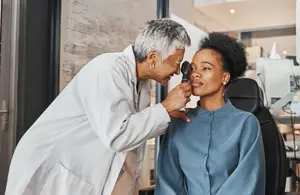
Many women in Commerce feel changes in their vision long before they mention them. They give much of themselves to family, work, and community, and eye care often falls to the bottom of the list.
At Commerce Family Eyecare, our eye care team is ready to help you focus on your vision.
What Makes Women More Vulnerable to Eye Conditions
A woman’s body reacts differently to shifting seasons. Hormones rise and fall. Chemistry changes during pregnancy and menopause. These shifts can stir changes in tear production, lens flexibility, and retinal health.
Below are common conditions that appear more often in women:
Dry Eye Syndrome
Hormonal changes influence tear film stability. Women often notice burning, stinging, or a sandy sensation, especially during perimenopause or after long stretches of screen use. Dry air and pollen seasons can intensify dry eye symptoms.
Age-Related Vision Changes
As women reach their forties and fifties, the lens inside the eye grows less flexible. Reading distances feel uncomfortable, and small print begins to blur. Cataracts also form with age, a natural change that can cloud the lens and soften contrast.
Autoimmune Conditions
Autoimmune diseases affect women at higher rates. Conditions such as rheumatoid arthritis, lupus, or thyroid disease can influence tear production, corneal comfort, or optic nerve function.
Pregnancy-Related Vision Changes
Many women notice blurriness, dryness, or shifts in prescription during pregnancy. Fluid changes influence corneal shape, and blood pressure changes may affect the retina.
How to Prioritize Your Eye Health
Eye care is most effective when it becomes routine, rather than reactive. Women often protect the people they love, yet forget that personal care sets the foundation for a lifetime of clear sight.
Here are simple starting points:
- Schedule yearly eye exams. Regular visits help us track small changes before they turn into bigger challenges.
- Protect your eyes outdoors with quality sunglasses. Sunlight and UV exposure influence cataract development and long-term comfort.
- Support moisture balance with hydration and environmental awareness. Indoor air, ceiling fans, and long stretches of screen time all dry the tear film.
- Listen to your body. Any change in clarity, comfort, or color perception deserves attention.
Why Annual Exams Matter More for Women
Early care preserves sight. Many serious eye conditions grow quietly in the background without obvious symptoms. A yearly comprehensive eye exam allows our eye doctors to review your retina, optic nerve, prescription, and overall eye function. These visits also give you room to speak freely about changes in comfort, clarity, or lifestyle needs.
Our team works to lighten your load by offering steady care close to home. With medical expertise, advanced diagnostic tools, low vision services, myopia management for children, scleral lenses for sensitive eyes, and a full optical, we offer care for every season of your family’s life.
Get Personalized Eye Care at Commerce Family Eyecare
Women face unique risks throughout life, yet simple habits and regular care can protect their vision.
Give your eyes the same attention you give everything else you care about. Book your eye care appointment today.
FAQs
Why do women experience dry eye more often?
Hormonal shifts influence tear production. Pregnancy, birth control, and menopause all affect moisture levels on the eye’s surface.
Can pregnancy change my vision?
Yes. Fluid changes and shifts in blood pressure may alter your prescription or cause temporary dryness. Any sudden glare, flashes, or dark spots should be evaluated.
Are women more likely to develop cataracts?
Women live longer on average, increasing the risk of age-related eye changes, including cataracts.
How often should women schedule eye exams?
Most women benefit from a yearly eye exam. If you have diabetes, an autoimmune disease, or sudden changes in vision, you may need more frequent visits.